Joel Rotenberg (translator), 2009
Once I got into the wrong cab at the wrong time of the day. The cab smelled weedy and the cabbie slightly demented. Among the dump of complaints and rambling about various systematic failures in various systems, he was still lucid when it came to Steinbeck and Hemingway. East of Eden was Steinbeck’s best, his family was the same, jealousy got the better of people… the editors dug The Garden of Eden from Hemingway’s trunk, milked for money, he had gone bush then… the cabbie could not be interrupted.
I should have defended The Garden of Eden and Scribner’s Frankeinstein operations. I love all the multitudes of Hemingway. But was so crept out in that Uberless universe that only sporadic uh-huhs ever came out of my mouth.
Posthumous publication might be the rare place where hindsight benefits, especially for authors like Hemingway and Zweig. For every miserable, yet non-suicidal adult who can see a better tomorrow thanks to that tiny ray of reality distortion (sometimes called hope), another suicidal-depressive is haunted by reality – constant, hard, and unendurable as it is. That fragment of trauma in a loop is what draws me to posthumous publications, for a chance to see what’s left, or imprints the hardest, after most have gone.
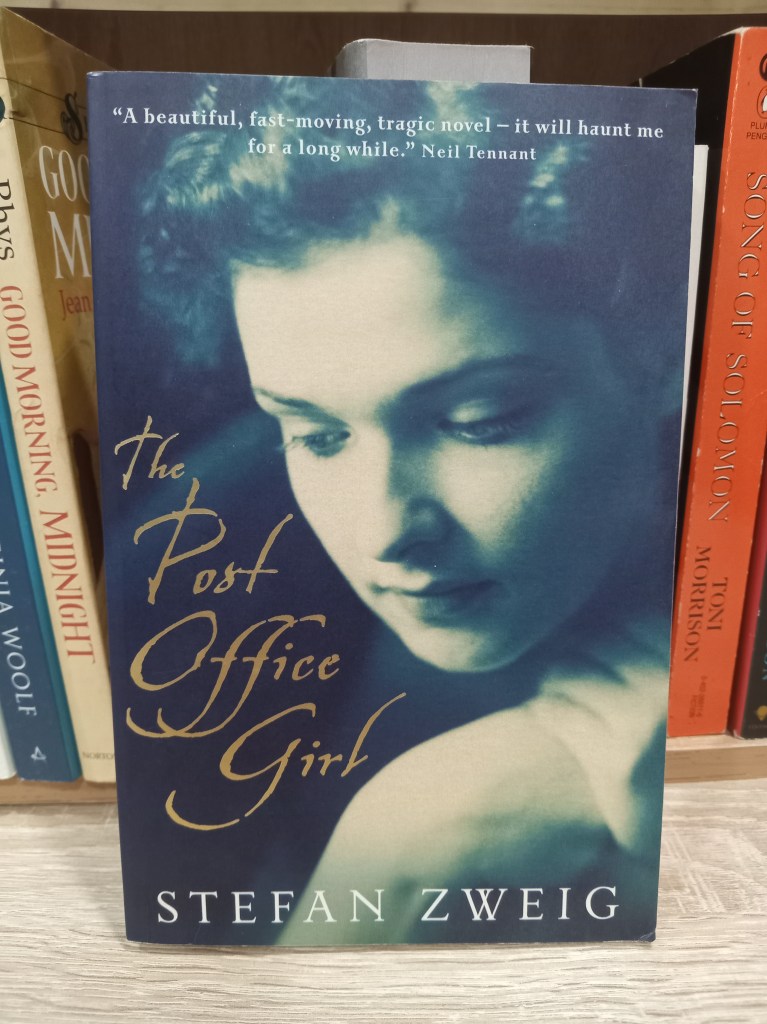
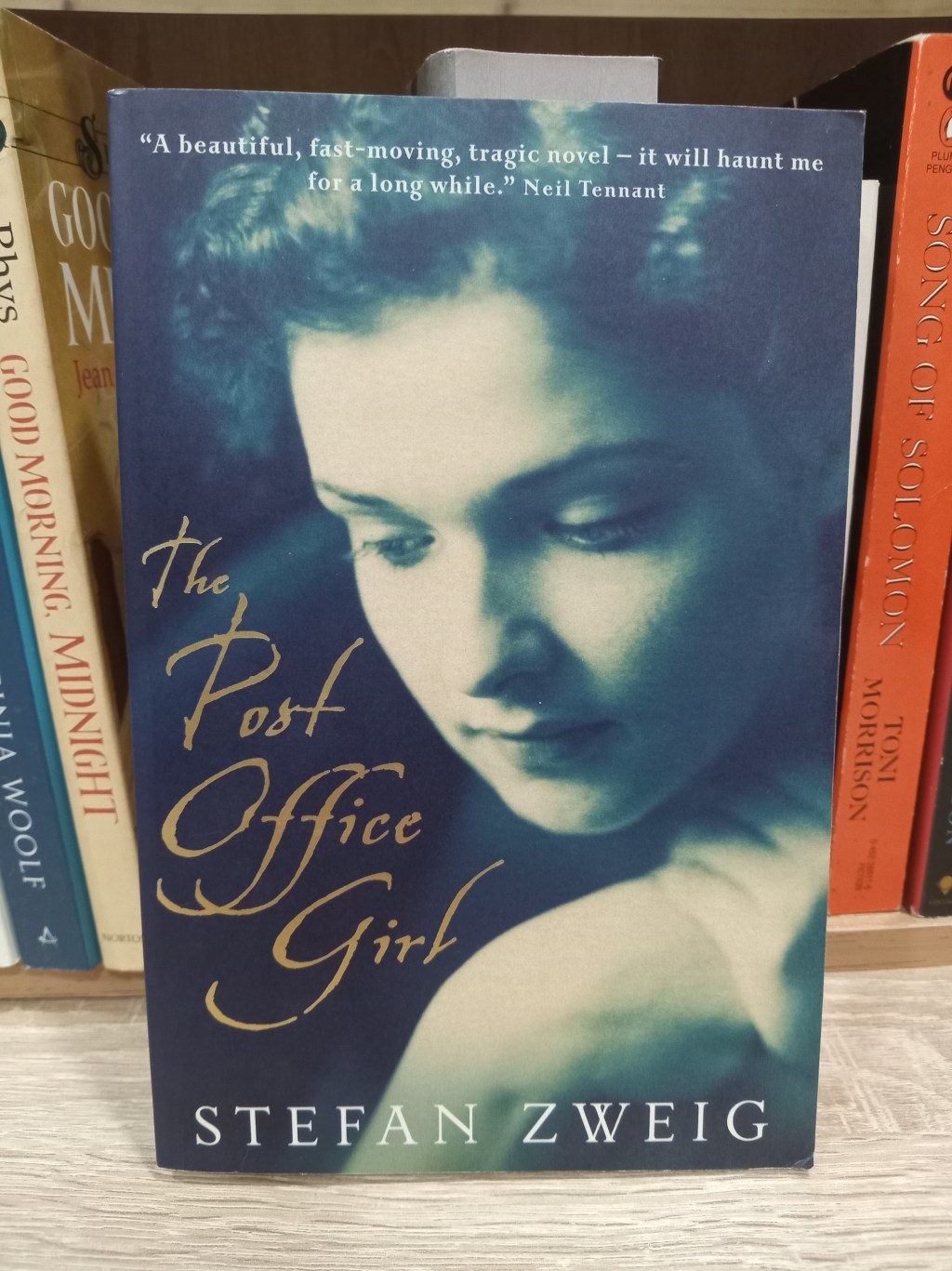
The Post Office Girl (Christine Hoflehner, a post office girl trapped in a disintegrated and insolvent post-war Austria) dissects a drastic decision that would most likely destroy the self in a struggle to carry on living. Zweig’s masterful depiction of Christine’s psyche – its morphoses – navigates the depth of the unconscious without normative constraints (perhaps through his decades long friendship with Freud). The true craft is how Christine differs from Ferdinand, abate their similar circumstances.
“Well, maybe it’s true, I am full of anger… But I don’t envy anyone, I mean the kind of envy where I’d say I’d like myself to be better off and others better worse off… Of course I don’t begrudge anyone their happiness… I can’t help it, no one can help asking ‘why not me’ now and then when they see others living high on the hog… You know what I’m driving at… I don’t mean ‘why not me instead of him’… Just ‘why not me too.’” – said Ferdinand (Christine’s lover and partner in crime, who also lost everything when he returned home from WWI).
The books reads like a swan song knowing Zweig had been stateless refugee in the last years of his life, witnessing the end of the world as he knew it.
He leaves readers to decide for Christine and Ferdinand. The open ending shapes an even more powerful pacifist narrative. What choice will you make in this particular universe, where imagination trounces fate? If anything can happen, if all is up to me, if fate is for me and I am for them, they should live.
 Vu Thao
Leave a comment